Puy du Fou vs. Paris: Two Very Different Ways to Experience French History
Puy du Fou and Paris can both make French history emotionally vivid, but they do so through very different cultural languages. One builds large-scale historical spectacles in a dedicated destination, while the other layers museums, monuments, streets, archives, and intimate interpretation across a living city. Comparing them is not about declaring a winner. It is about understanding what each format can reveal and what each inevitably leaves out.
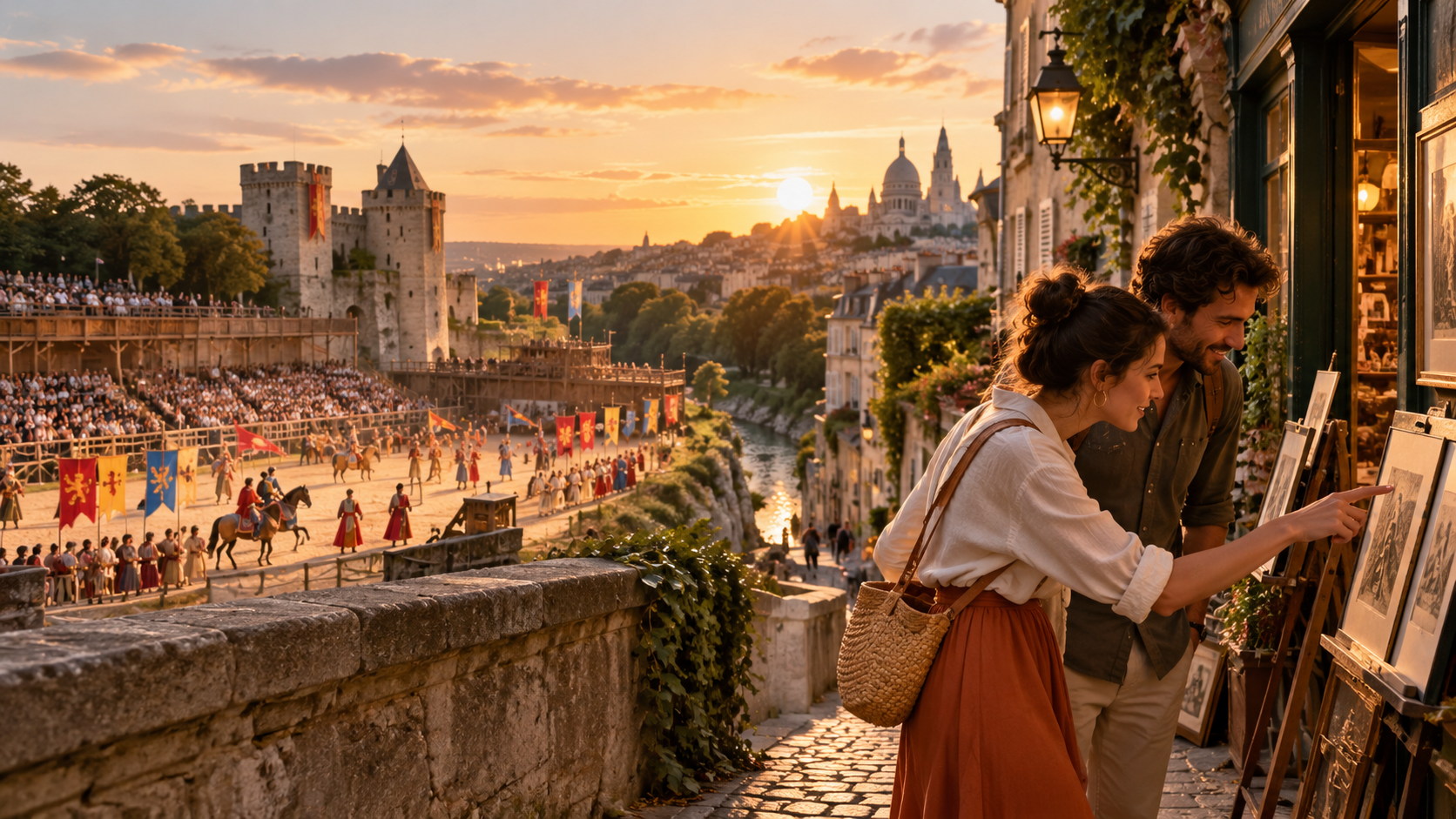
Puy du Fou uses scale, choreography, and emotional momentum
A dedicated historical park can coordinate architecture, performers, animals, music, lighting, and large audiences around a clear dramatic arc. That scale creates memorable images and makes collective action immediately legible. It also compresses periods, characters, and conflicts to sustain rhythm and emotion. Visitors should therefore enjoy the performance while remembering that theatrical coherence is not the same as a complete historical account.
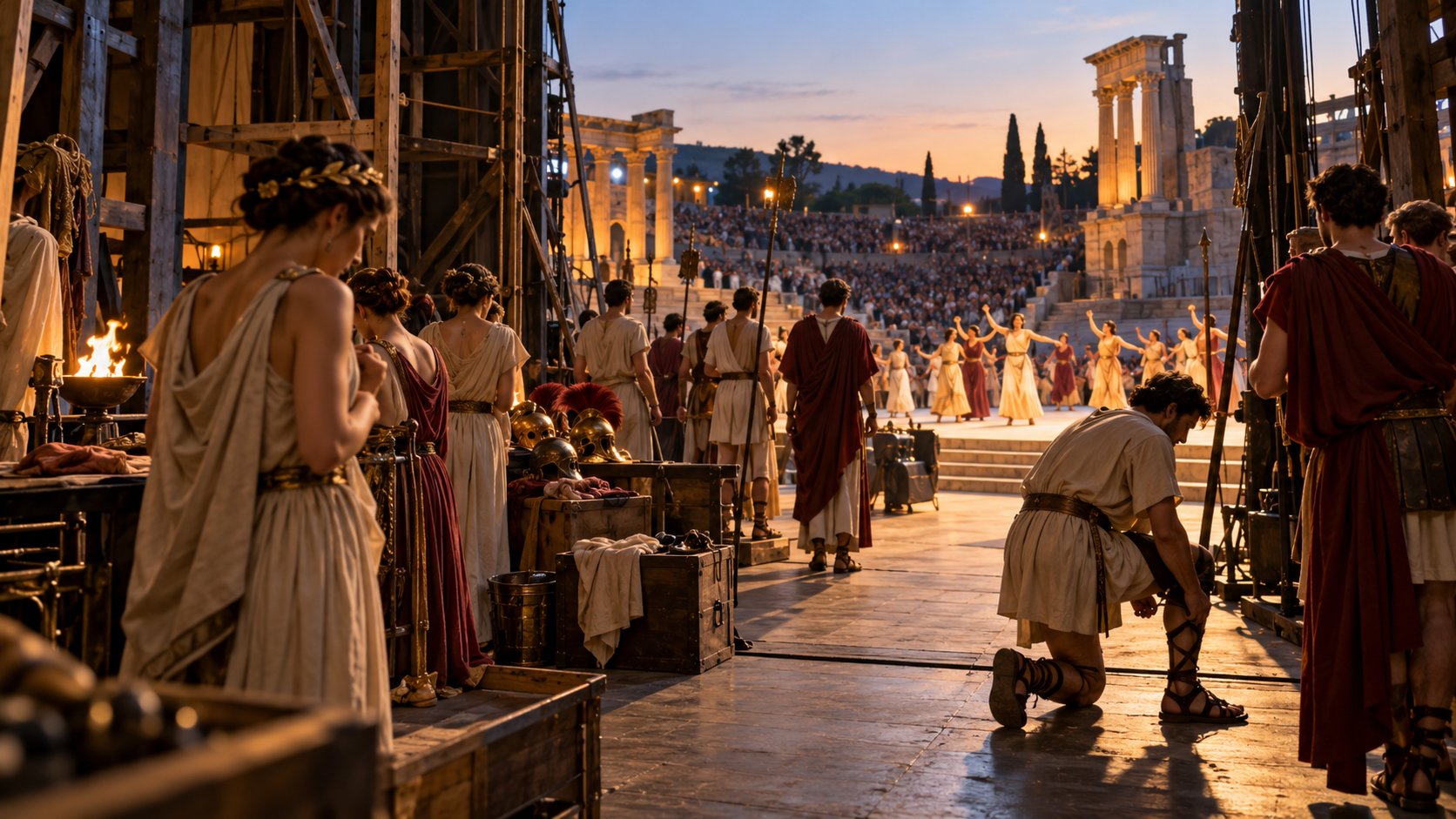
Paris lets evidence remain attached to place
In Paris, historical interpretation often begins with a surviving building, an original object, an archaeological layer, or the shape of a street. The city does not present one continuous narrative, so visitors must connect fragments across institutions and neighborhoods. This can feel less spectacular, but it preserves friction, contradiction, and change. A prison chapel, a museum room, and a redesigned avenue may tell competing parts of the same political story.
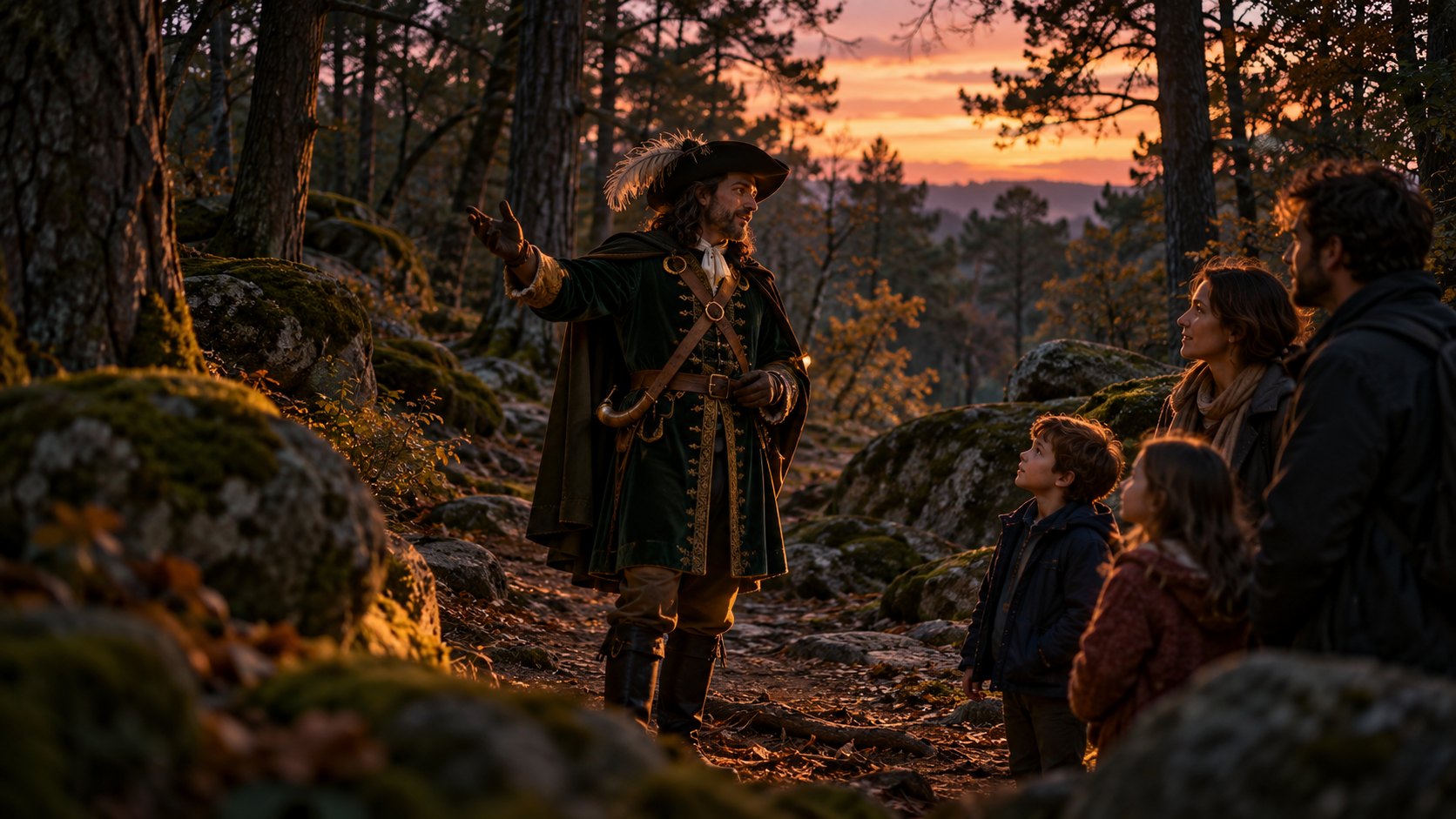
Live characters can bridge spectacle and evidence
A small character-led encounter offers theatrical presence without the infrastructure of a major show. In Fontainebleau forest, a professional actor embodying the Grand Veneur can use a documented landscape to explore a legend while naming it as legend. The group can ask questions and observe the real environment instead of receiving a fixed sequence from a distant stage. Historical responsibility depends on keeping performance, interpretation, and evidence visibly distinct.
Choose according to the trip you are actually planning
Choose Puy du Fou when the family wants a destination built around full-day spectacle and is prepared for the travel and schedule it requires. Choose Paris-based experiences when the priority is collections, architecture, urban history, and flexible combinations within a broader city stay. Do not force either into the other’s role. The strongest cultural trip may include both, but only if time and geography allow each to be experienced properly.
French history does not have one ideal delivery system. Spectacle can create emotional orientation, while original places and collections can complicate the story with material evidence. Live interpretation can connect the two by making questions audible and human. Whatever format you choose, ask what is documented, what has been compressed, and whose perspective organizes the scene.
The comparison also becomes clearer when you describe the day around the performance. A park outing has its own travel, seasonal operation, and ticket arrangements, while a city encounter must fit the route through museums and neighborhoods you actually intend to take. Check those details independently instead of treating a shared interest in history as evidence that the formats are interchangeable. If your wish is for a sequence of major staged scenes, preserve that expectation when choosing the trip. If you want to follow one historical question into original objects and a lived-in setting, give the Paris route enough space to develop it. Both choices can reward curiosity when their practical shape matches the cultural purpose.
Keep the historical subject and the practical destination in the same decision. A performance outside your city stay involves its own travel and schedule, whereas a Paris outing must fit the entrances and routes you plan to use. Review current operation and product conditions independently, without assuming that similar historical themes imply identical arrangements. If you choose a theatrical interpretation, identify one question you would like to explore through an object or reliable account afterward. If you choose a collection, let its surviving material challenge any dramatic image you already carry. You can enjoy spectacle and evidence without demanding that one give the same experience as the other. The strongest comparison helps you understand the cultural purpose of this particular trip.
Continue the story with Immmersiv
In Fontainebleau forest, The Mysteries of Fontainebleau Forest features a professional actor embodying the Grand Veneur and explicitly separates legend from historical and natural observation. For political history through a personal voice, Marie Antoinette, Rebel Queen features a professional actor embodying Marie Antoinette at Versailles. Treat either as a focused place-based experience rather than a substitute for a full historical spectacle. Confirm current availability, language, meeting point, and transport before planning.