Museums vs. Immersive Experiences: How Do You Want to Discover Paris?
Museums and immersive experiences do not ask visitors to learn in the same way. A museum can place you in front of an original object whose material survival is part of its authority, while an immersive experience may use space, sound, performance, or projection to create narrative momentum. Neither format is automatically deeper, easier, or more accurate. The useful question is what kind of attention you want to practice today.
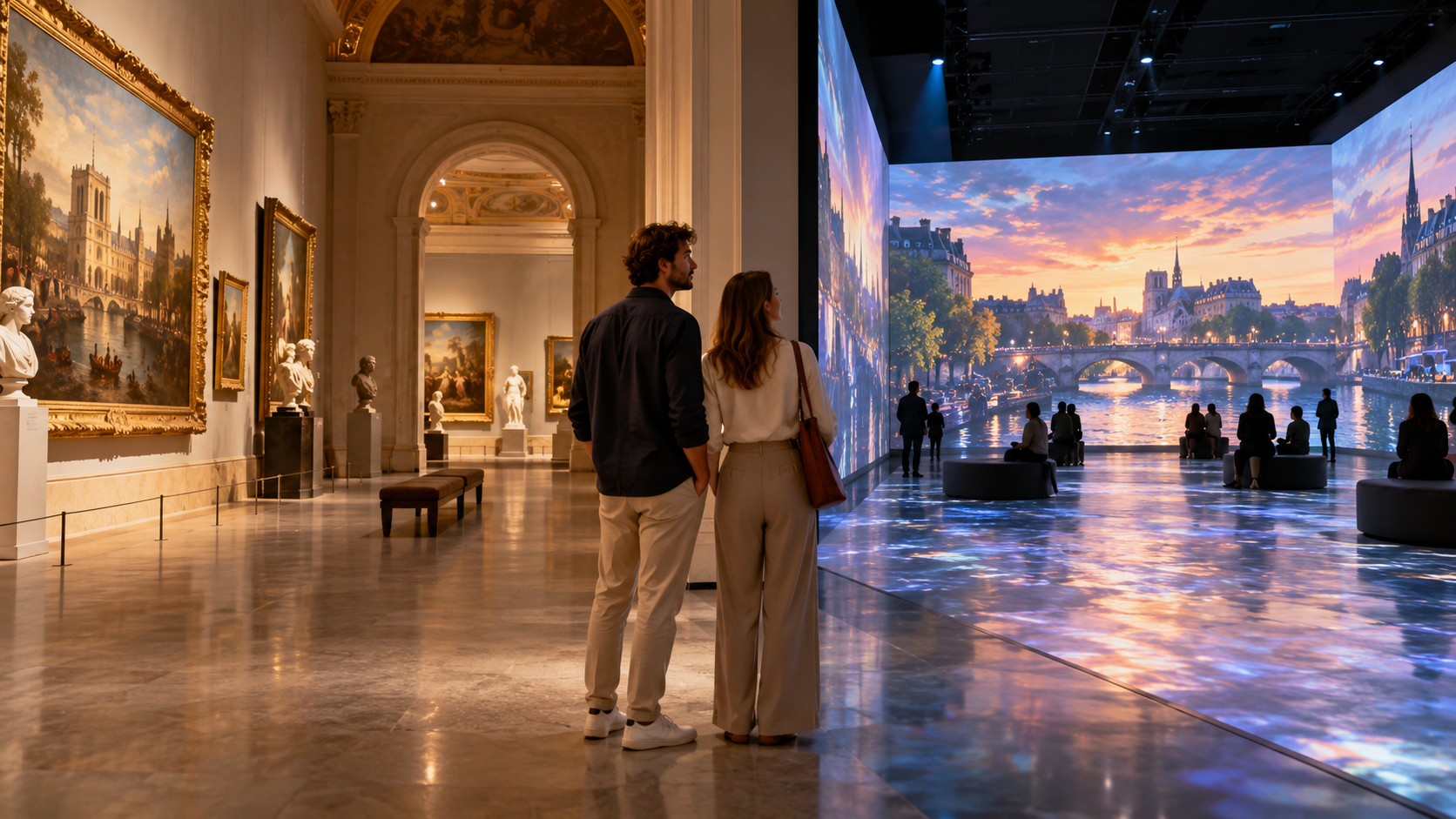
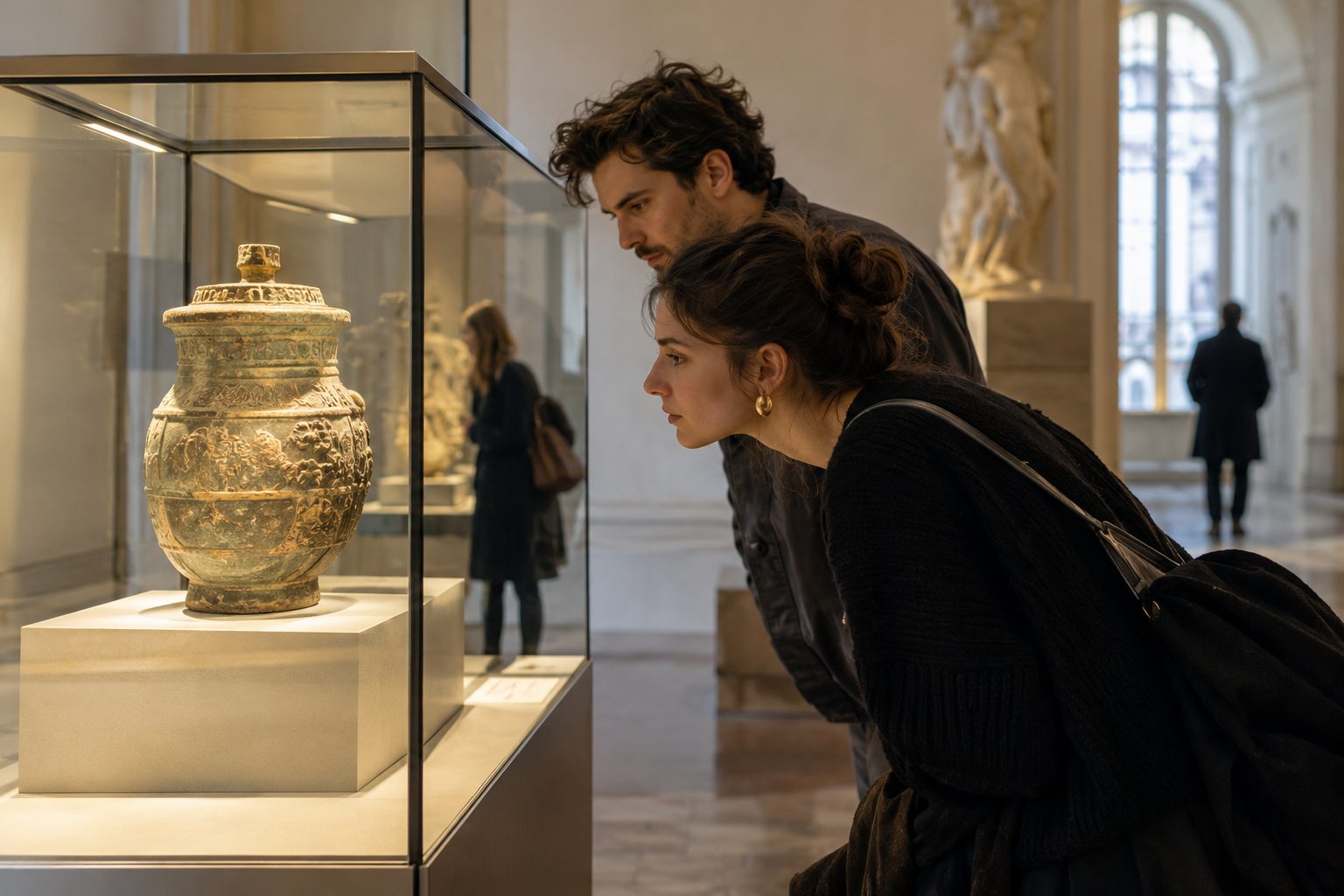
Museums begin with collections and evidence
A museum’s distinctive strength is its relationship to collections, conservation, research, and public interpretation. Standing before an original object can reveal scale, material, damage, craft, and historical distance in ways no reproduction can fully replace. Labels, catalogues, and curatorial sequences provide arguments that visitors can examine at their own speed. The experience demands patience, but it offers a direct encounter with evidence.
Immersion begins with presence and sequence
An immersive format organizes attention through movement, atmosphere, participation, or a live voice. It can make chronology easier to follow and help visitors imagine relationships between places, choices, and consequences. Strong immersion signals where documented history ends and interpretation begins. Weak immersion hides uncertainty behind effects, so spectacle alone is never proof of quality.
Match the format to your energy and learning style
Choose a museum when you want close looking, original material, or the freedom to pause and disagree with the interpretation. Choose an immersive experience when a narrative thread, spatial context, or human exchange will help you enter an unfamiliar period. Families and first-time learners may appreciate clear story structure, while specialists may value access to objects and primary evidence. Most travelers benefit from alternating the two rather than stacking several demanding experiences of the same type.
Use one format to sharpen the other
Visit a museum first to establish names, objects, and chronology, then use live storytelling to connect those facts to streets and choices. Reverse the order when a character-led encounter can create questions that make a later museum visit more purposeful. Take notes on what is factual, what is interpretation, and what remains uncertain. The combination works when each format keeps its integrity instead of pretending to replace the other.
A good Paris itinerary does not need to choose a winning format. It can place an object-centered morning beside an interpretive walk, or a projection-based installation beside a collection that restores material detail. Judge every experience by clarity, evidence, accessibility, and the quality of attention it creates. The best choice is the one that makes you more curious about the next layer of the story.
You can make the comparison more useful by carrying one question between the two formats. An original object might raise an issue about materials or representation, while a performance gives that issue an emotional and spatial setting. Afterward, identify which observation came from the object, which interpretation came from the account, and which connection you made yourself. There is no need to rank those responses, but distinguishing them prevents a vivid scene from quietly becoming historical proof. Leave time between visits for the question to change rather than expect the second encounter to confirm everything from the first. That small practice turns a mixed cultural day into a conversation between forms of discovery.
A comparison becomes clearer when you think about what you will actually do in each format. Looking quietly at materials and marks on an original object differs from following a spoken account through a setting. Both can demand attention, and neither should be chosen solely because it is expected to be easier. Consider language, walking and standing needs, the ability to pause, and the subject that holds your interest. Plan the interval between activities as carefully as the booking, with a realistic transfer and time for food. Afterward, name one observation from the object and one question prompted by the performance. The distinction lets the two experiences enrich one another without asking a dramatized account to stand in for original evidence.
Continue the story with Immmersiv
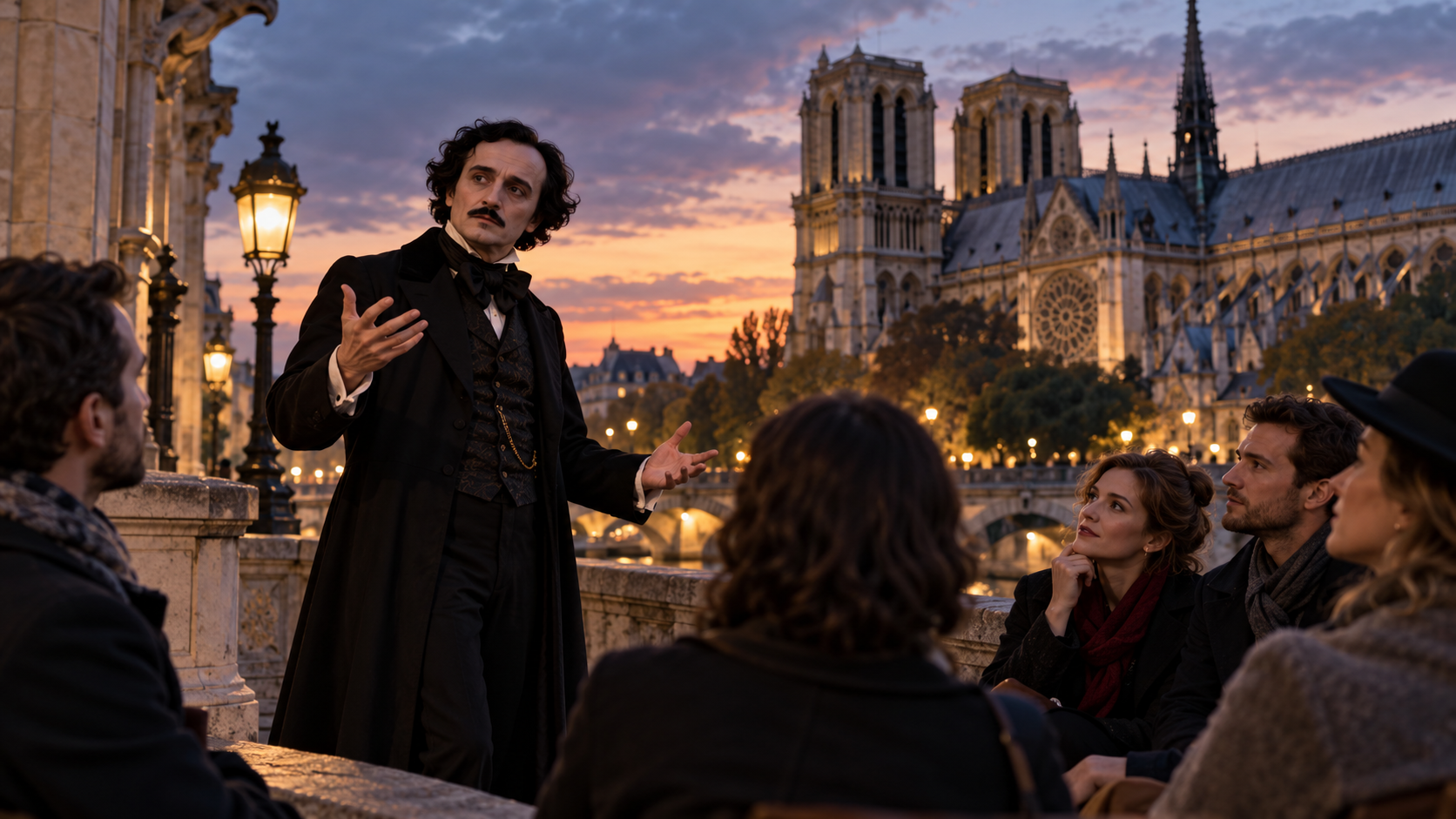
For literary atmosphere grounded in a real district, The Dark Legends of Paris features a professional actor embodying Edgar Allan Poe on the Île de la Cité while keeping legend distinct from documented history. For art history through human networks, The Impressionists of Montmartre features a professional actor embodying Père Tanguy. Choose the encounter that best extends the museum questions already shaping your day. Confirm date, language, route, and practical details before planning either encounter.