Is Paris a Good Destination for Teenagers?
Paris is an excellent destination for teenagers, but not when the itinerary treats them as silent passengers on an adult checklist. The city combines recognizable landmarks with fashion, music, design, street life, food, sport, technology, art, and stories filled with difficult choices. Teenagers are old enough to question the official version and young enough to enjoy discovering a city as a puzzle. The decisive ingredient is agency because they need meaningful choices rather than a program merely labeled for teens.

Paris works because it contains several cities at once
A teenager interested in visual culture can move from a historic façade to contemporary architecture and street art in the same day. Someone drawn to stories can explore medieval mystery, revolution, literary Paris, wartime choices, or the rise of modern entertainment. Food-focused teens can compare neighborhood bakeries and markets, while music or fashion interests create entirely different routes. The city becomes compelling when those interests determine the lens.
Famous landmarks still matter because recognition creates anticipation. The mistake is expecting the Eiffel Tower, Louvre, or Notre-Dame to carry an entire trip without context or participation. Pair one icon with a contrasting neighborhood, a specific question, or a hands-on activity. Teenagers often respond better to one strong museum mission than to several hours of compulsory appreciation.
Give teenagers control over real decisions
Invite each teenager to lead one half-day from two or three vetted options. Let them navigate a transit segment, choose the lunch neighborhood, select three works in a museum, or decide which view is worth the climb. The choice should change what the family actually does, otherwise it feels cosmetic. Clear boundaries about budget, meeting points, phone use, and independent time make autonomy safer and more credible.
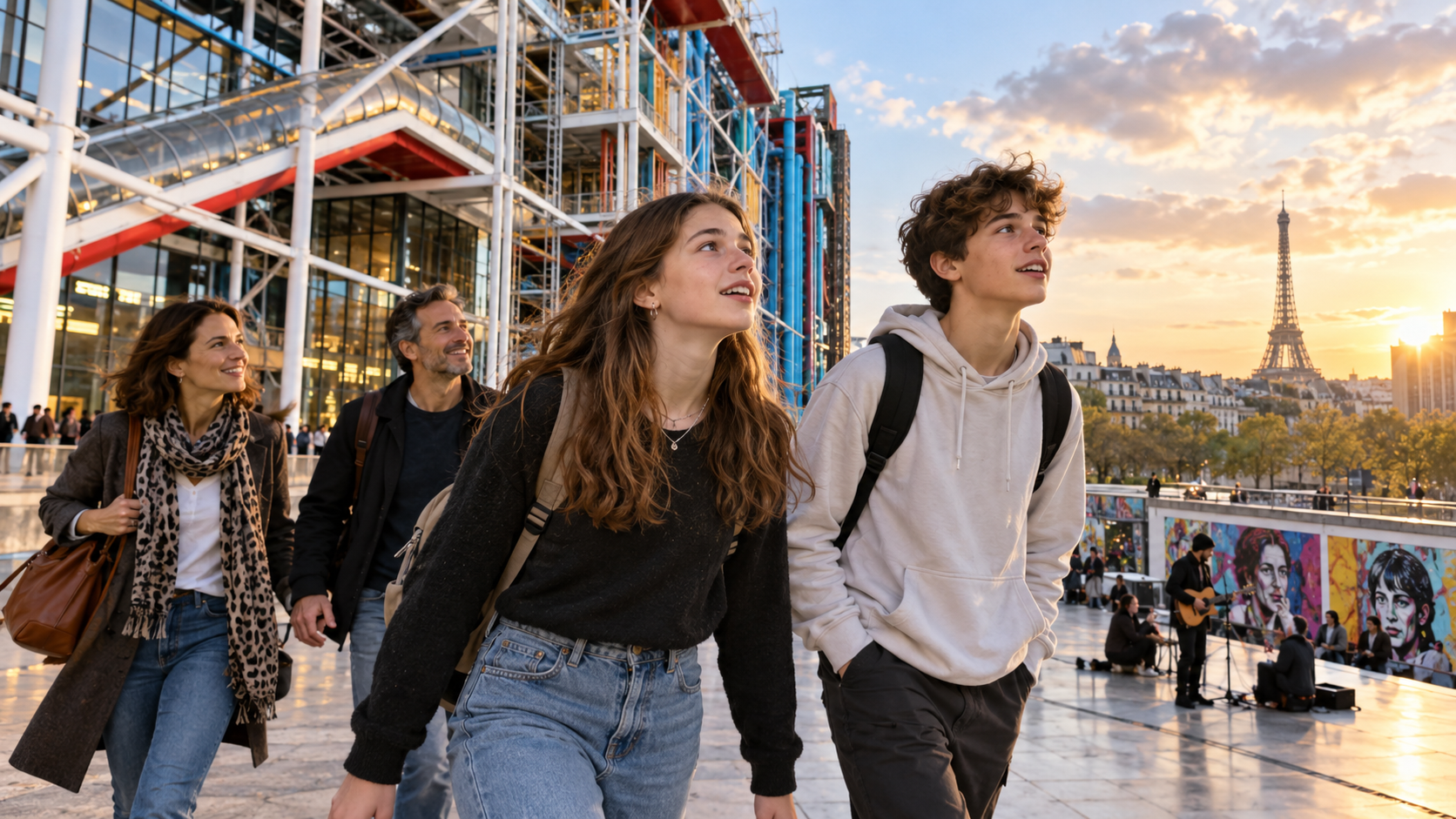
Build breathing room into every day. Teenagers may want time to browse, photograph, sit by the Seine, message friends, or return to a shop without turning that moment into a cultural lesson. Those pauses are not evidence that they dislike Paris. They are part of how adolescents regulate attention and make a trip their own.
History becomes powerful when it respects their intelligence
Teenagers can handle ambiguity, conflicting evidence, and flawed historical figures. Ask whether a source is trustworthy, whose voice is missing, or why one version of a story became famous. Paris offers unusually rich settings for these questions because political power, protest, art, literature, and memory remain visible in public space. Avoid reducing difficult periods to gruesome anecdotes simply to hold attention.
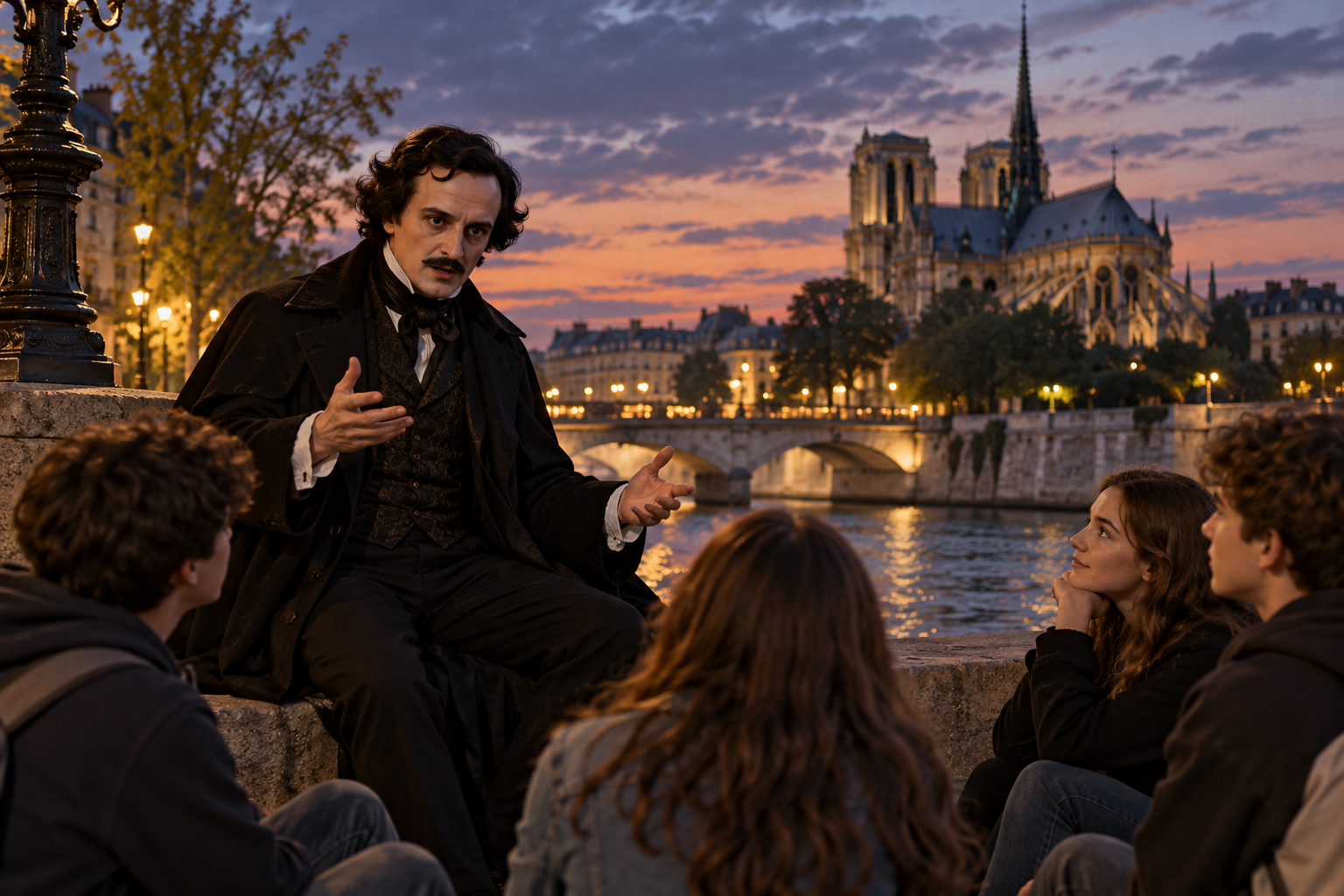
A professional actor embodying Edgar Allan Poe can open an atmospheric route into literary Paris, imagination, and the uncertain boundary between biography and later myth. A professional actor embodying Joséphine Baker can lead to questions about celebrity, racial representation, resistance, and citizenship. The encounter works when teenagers are invited to challenge, compare, and ask, not only to listen. Live storytelling should activate critical thinking rather than suspend it.
Plan for energy, safety, and a different evening rhythm
Most teenagers can manage more walking than younger children, but that does not make an overfilled schedule enjoyable. Alternate a high-focus museum or monument with outdoor movement, contemporary culture, and an unscheduled meal. Check age restrictions, closing times, transport disruptions, and late-evening conditions through official sources. Agree in advance on what happens if phones lose power or family members become separated.
Paris is therefore a strong destination for teenagers who are treated as travelers with developing tastes. It may disappoint when every day is a lecture, every photograph is staged, and every minute belongs to someone else’s list. Ask what they want to understand, make, taste, or question, then build the itinerary around those verbs. The result is often a family trip that feels shared rather than endured.
Continue the story with Immmersiv
Edgar Allan Poe on the Île de la Cité features a professional actor embodying Edgar Allan Poe in an atmospheric literary setting. Joséphine Baker in Paris features a professional actor embodying Joséphine Baker and connects performance with questions of resistance and citizenship. Let the teenager choose which set of questions feels more compelling. Confirm age suitability, language, duration, meeting point, and current details before planning.