How Many Days in Paris? A 3, 5 or 7-Day Guide
For a first visit to Paris, we recommend four or five full days to balance major landmarks, neighborhoods and time to pause. Three days work for a focused introduction; seven days suit a slower cultural trip and leave more room for a day trip. Count usable days between arrival and departure, then choose the length that matches your interests and energy.

Two or three days: choose one version of Paris
A short stay works when it has a clear point of view. Instead of crossing the city for isolated icons, organize each half-day around one walkable area and one important indoor visit. A first morning might connect the Île de la Cité with the Seine, while another half-day pairs the Louvre with the Tuileries rather than adding three unrelated museums. This structure reduces transport time and gives every place enough attention to become more than a photograph.
Three days usually support one major museum, one historic district, one panoramic or river experience, and one evening of performance or storytelling. It does not comfortably support every celebrated museum, Versailles, Montmartre, and a full set of monuments. Travelers arriving after an overnight flight should also avoid treating arrival day as a complete cultural day. Build recovery into the plan, because exhaustion can flatten even the most extraordinary collection.
Four or five days: the practical sweet spot
Four full days allow the city to become coherent rather than merely impressive. You can devote one day to the historic center, one to a major art collection, one to a neighborhood such as Montmartre or the Marais, and one to the interests that made you choose Paris in the first place. A fifth day creates room for Versailles or another focused excursion without forcing the rest of the city into a race. It also gives you permission to return to a place that unexpectedly mattered.
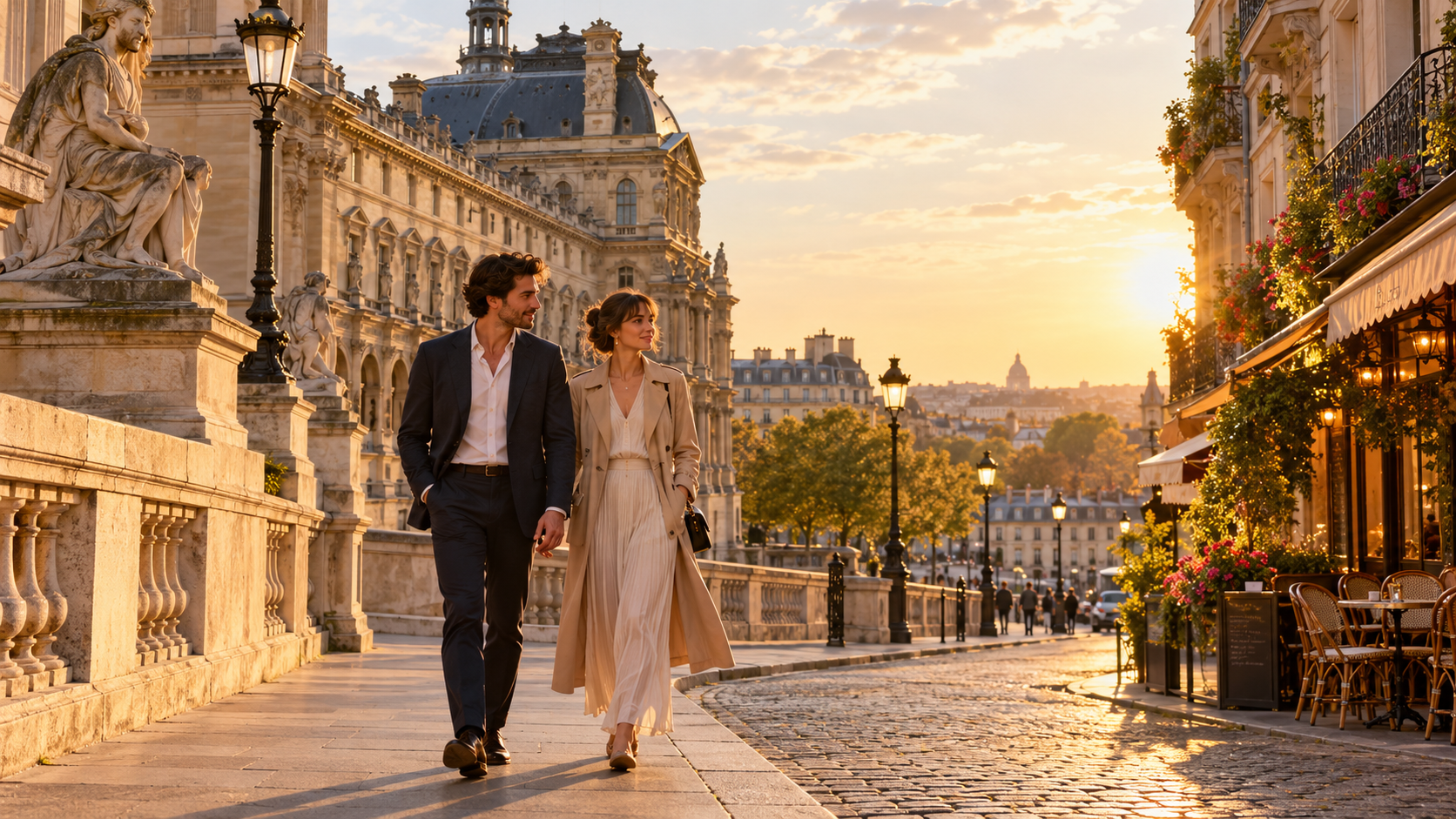
The extra time is not empty space; it is resilience. Opening schedules change, temporary exhibitions sell out, weather shifts, and a long lunch may deserve to remain long. With a flexible half-day, a closure becomes a change of emphasis rather than a crisis. Culture is easier to remember when the schedule leaves room for attention.
Six or seven days: let Paris become a lived landscape
A week supports both breadth and depth. History lovers can trace medieval Paris, royal power, revolution, nineteenth-century transformation, and modern cultural life across different days. Art travelers can compare the Louvre, Orsay, artist studios, and the neighborhoods where creative communities formed without stacking museums back to back. Families and older travelers gain the equally valuable advantage of shorter days and longer breaks.
Seven days also make one day trip reasonable, but not compulsory. Versailles can occupy most of a day once transport, security, gardens, and rest are included, while Auvers-sur-Oise or Giverny reward their own distinct focus. A day outside central Paris should support the story of the trip rather than serve as proof that more territory was covered. Keep at least one evening lightly planned so the week does not become an endurance test.
Count full days, then protect your priorities
Begin with the number of complete, usable days between arrival and departure. Choose three non-negotiable experiences, then place only one major commitment in each half-day. Group nearby places, verify official opening information, and reserve timed entries where the venue recommends them. Everything else belongs on a flexible list, not in a timetable that assumes perfect energy and zero queues.
The honest answer for most first trips is therefore four to five full days. Choose three if time is limited and you can accept a deliberately partial view, or seven if culture, history, and neighborhood life are central to the journey. Paris does not reward completion because it cannot be completed. It rewards a pace at which stories begin to connect.
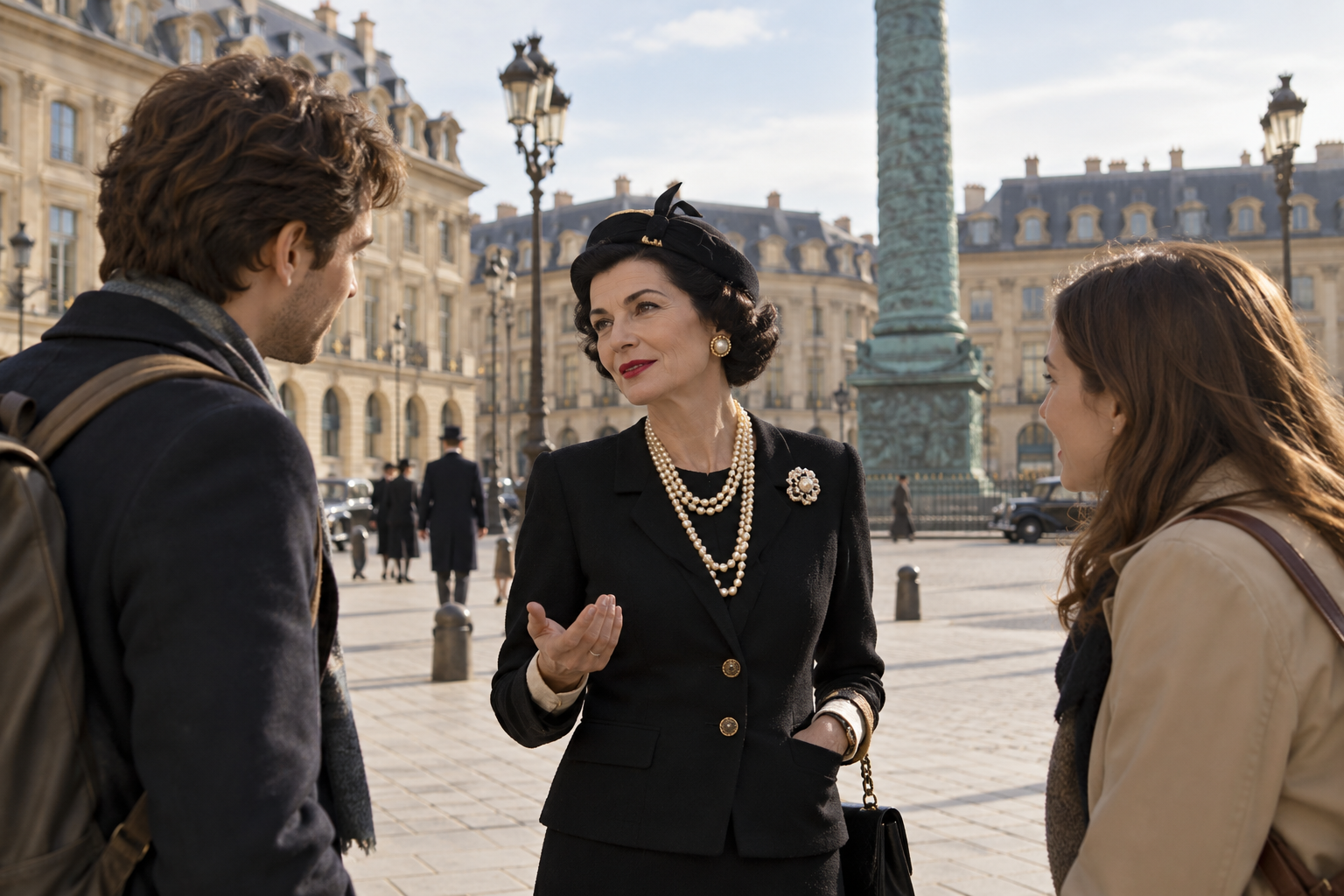
For the practical part of this outing, consult Paris, your playground to locate Immmersiv experiences. Browse the personalities according to the subject that interests you. Read what to expect alongside the individual experience description before booking. Confirm current language, suitability, walking requirements, access needs, and availability for your own group.
Continue the story with Immmersiv
For a character-led layer within a well-paced stay, Coco Chanel at Place Vendôme features a professional actor embodying Coco Chanel in the district associated with her Paris story. Hemingway in Montparnasse features a professional actor embodying Ernest Hemingway among the streets connected with literary Paris. Both encounters work best when the surrounding day remains geographically compact. Verify date, language, meeting point, and current practical details before placing either encounter in your itinerary.