The Perfect 5-Day Paris Itinerary for Families
A successful family week in Paris does not ask children to behave like miniature adult tourists. It alternates wonder with movement, concentrated visits with open space, and shared decisions with dependable structure. Five days are long enough for famous places, playful learning, neighborhood life, and a focused day beyond the center. This plan gives every day one story and protects the energy that allows curiosity to survive.

Days one and two: orientation, river, and one great museum
Make the first day legible rather than ambitious. Begin with a short walk near the Seine, identify a few landmarks from the outside, and let children help follow the map. A river perspective or a garden break can establish the shape of the city without demanding heavy concentration after travel. End early enough that dinner and sleep feel calm rather than like another scheduled attraction.
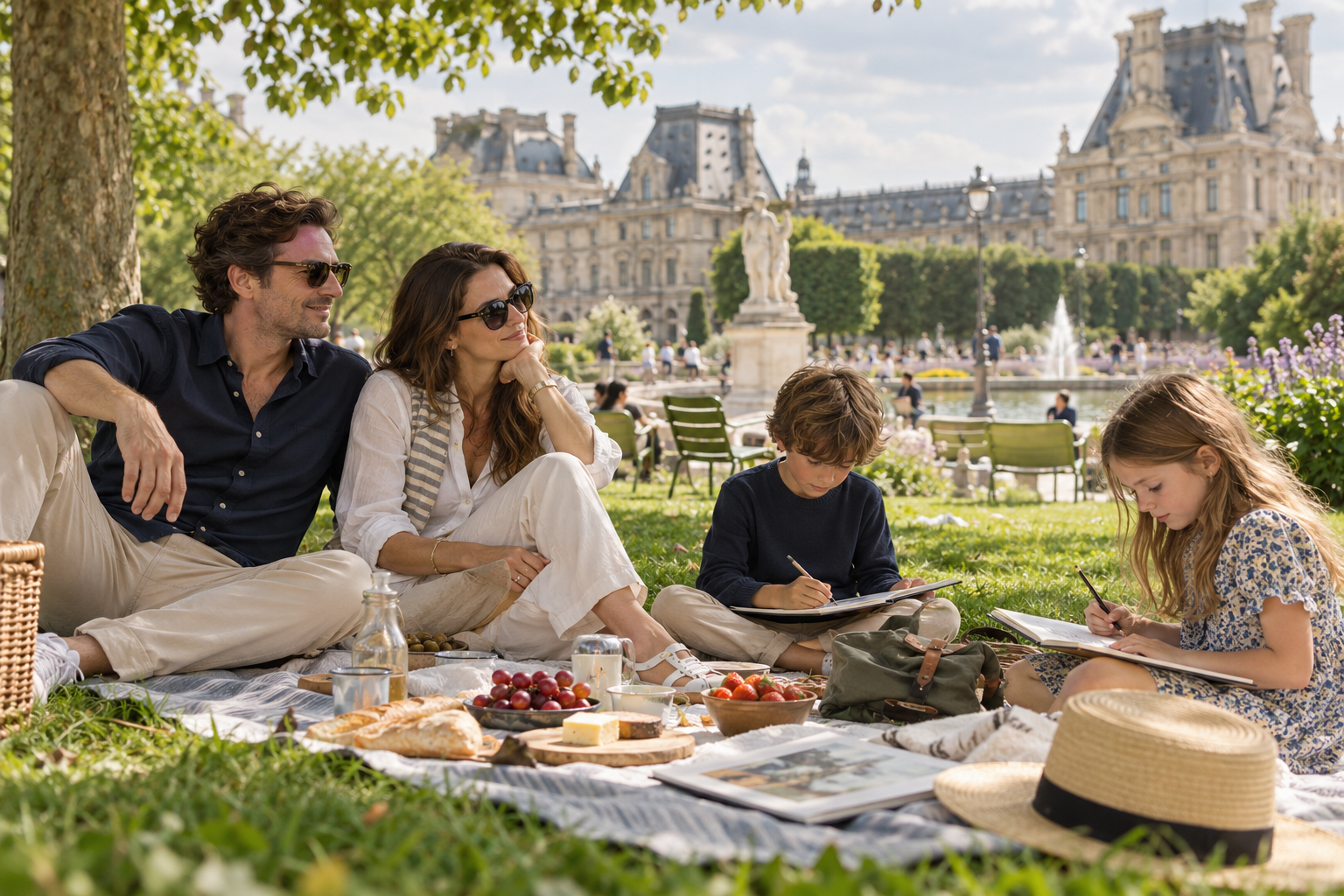
Use the second morning for one major museum, selected with the family’s interests and attention span in mind. At the Louvre, choose a compact route of several works or one civilization rather than promising the entire collection. Bring a question, sketchbook, or visual clue that turns looking into participation, then leave before fatigue becomes the dominant memory. The Tuileries or another nearby outdoor space provides the movement children often need after galleries.
Day three: make Paris a city children can decode
Devote the third day to interactive discovery and neighborhood texture. Science, music, architecture, or a small museum can work better than another monumental collection, especially when children can test, draw, listen, or compare. Follow the indoor visit with a local market, canal, or park where the family can observe everyday Paris. Give each child one decision, such as choosing the afternoon snack or the next short stop.
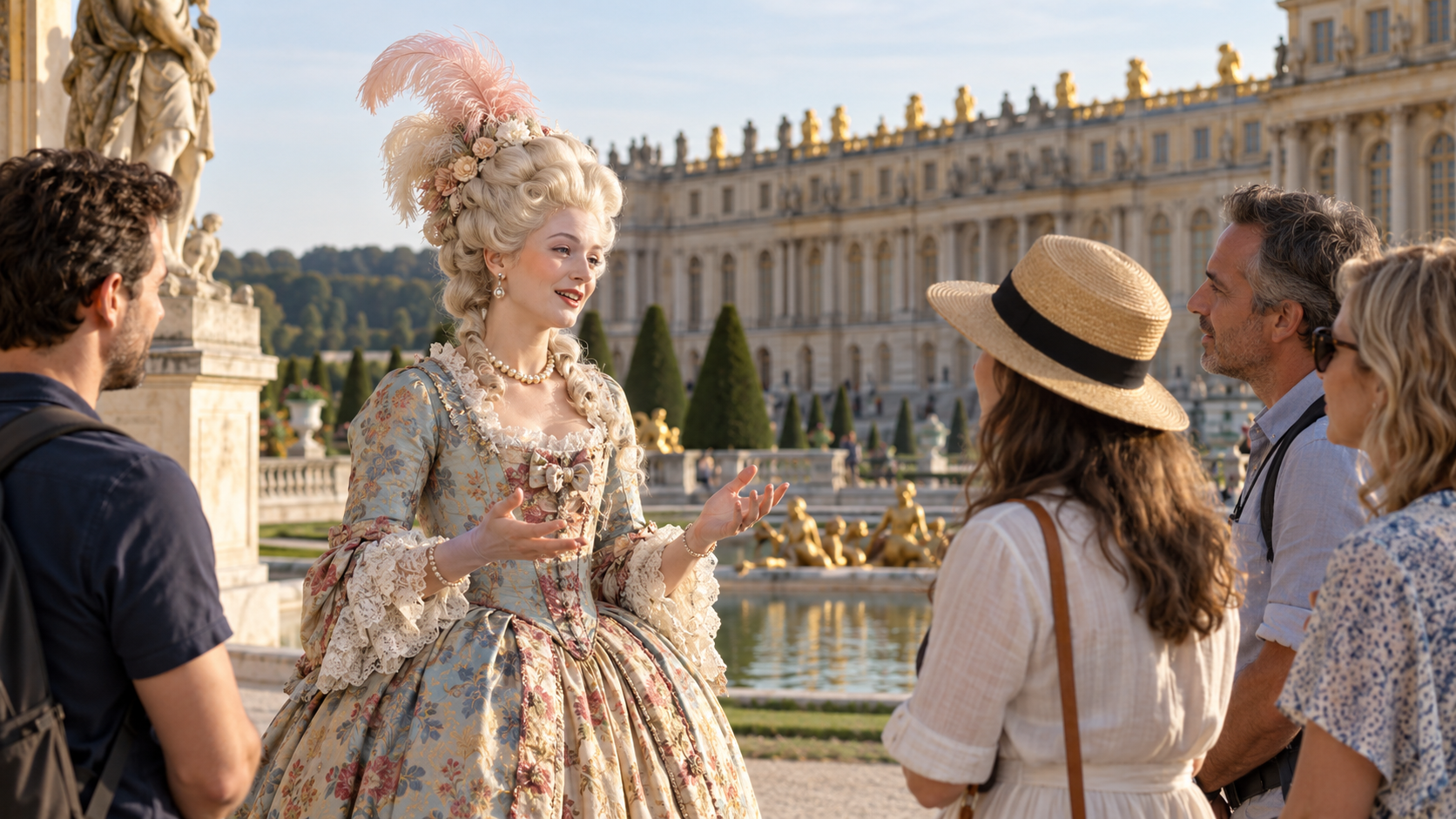
A live historical encounter can also change the emotional temperature of the trip. Instead of asking a child to remember a sequence of dates, a professional actor embodying a named character can make motives, choices, and contradictions discussable. Adults should still distinguish documented fact from interpretation and legend. The goal is not to simplify history into fantasy but to give the family a human point of entry.
Day four: Versailles with realistic expectations
Versailles deserves most of a day once transport, entry procedures, the palace, gardens, meals, and tired legs are considered. Decide in advance whether the family’s priority is royal rooms, garden scale, fountains, or the story of court life, because doing everything is rarely pleasant. Build in a seated break and check current access, transport, and seasonal programming directly with official sources. A shorter, focused visit can be more memorable than a heroic march through the entire estate.
Marie Antoinette’s story offers a way to discuss public image, privilege, political crisis, and the difference between evidence and later myth. A professional actor embodying Marie Antoinette can make those questions immediate when the encounter is historically careful. Children can compare what a person believed about herself with how others represented her. That exercise teaches historical thinking without turning a complex life into a costume anecdote.
Day five: Montmartre, shared memories, and a gentle finish
Keep the final day geographically compact. Visit Montmartre early, look for evidence of the neighborhood’s working and artistic histories, and avoid making the day solely about the summit and souvenir streets. Père Tanguy’s world introduces artists through the networks of friendship, commerce, disagreement, and support that helped their work circulate. This social story often feels more approachable to children than a list of movements and masterpieces.
Finish with a favorite repeated ritual rather than a final sprint. Return to a garden, choose one pastry together, revisit a river view, or let each family member name the place they would explore on another trip. Check tomorrow’s departure logistics before the evening begins so practical stress does not consume the last hours. The best five-day family itinerary leaves everyone with energy to tell stories, not merely proof that they completed a list.
For the practical part of this outing, consult Paris, your playground to locate Immmersiv experiences. Browse the personalities according to the subject that interests you. Read what to expect alongside the individual experience description before booking. Confirm current language, suitability, walking requirements, access needs, and availability for your own group.
Continue the story with Immmersiv
Marie Antoinette at Versailles features a professional actor embodying Marie Antoinette and approaches the queen’s story through the place most associated with court life. Père Tanguy and the Artists of Montmartre features a professional actor embodying Père Tanguy and reveals the relationships behind artistic Paris. Choose the encounter that best matches the family’s strongest question rather than adding both automatically. Confirm age suitability, language, duration, route, and current practical details before planning.