How to Experience Paris Like a Local — Without Missing Its History
“Like a local” should not mean pretending to belong to a city you are visiting. It means paying attention to ordinary rhythms, using public space respectfully, and allowing a neighborhood to be more than scenery. Parisian history is not confined to monuments, because streets, markets, cafés, schools, courtyards, and apartment buildings carry traces of how the city has changed. The richest trip combines daily life with enough context to recognize those layers.
Choose one neighborhood and return to it
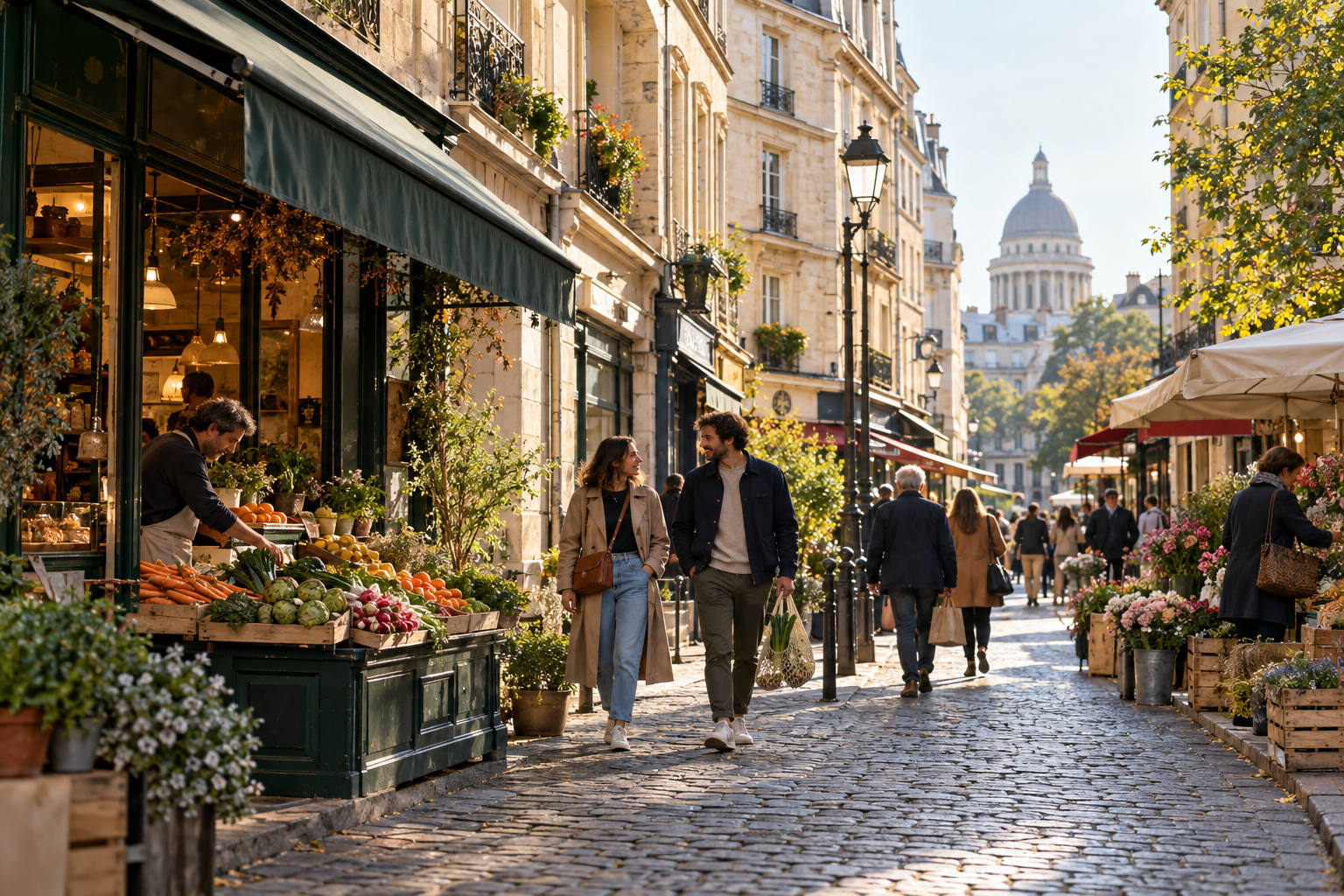
Local familiarity grows through repetition rather than secret addresses. Buy breakfast from the same street twice, notice when shutters open, and walk one route at different times of day. The Marais, Montparnasse, Montmartre, and the Latin Quarter each contain famous sites, but they also remain lived neighborhoods with residents, work, deliveries, and schools. Returning helps visitors see change instead of merely collecting photographs.
Read the city through useful details
Look at building numbers, street plaques, traces of former shop signs, variations in pavement, and the width of a street. At Musée Carnavalet, objects and period rooms provide a vocabulary for reading those details outside. The Archaeological Crypt beneath the square before Notre-Dame reveals how successive cities occupied the same central ground. History becomes practical when a wall, plan, or name changes what you notice on the next walk.
Use markets and cafés without turning them into theater sets
A market is first a place where people work and shop, not an attraction designed around visitors. Go at a reasonable hour, keep passageways clear, ask before photographing people, and buy with curiosity rather than performance. In a café, observe the pace of the room and avoid treating a small table as an unlimited office during busy service. Respect is the most credible form of local behavior.
Meet the people behind a neighborhood’s mythology
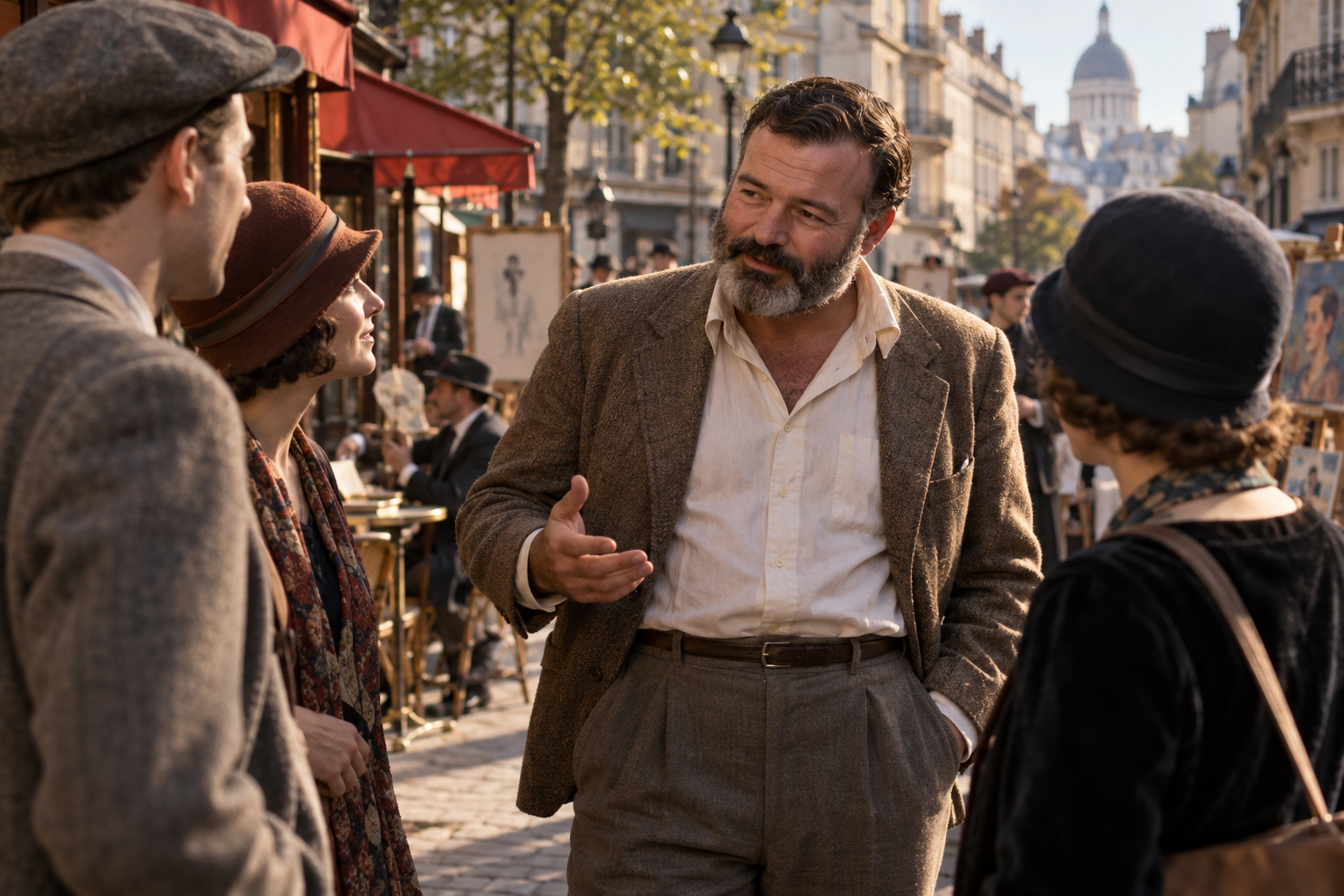
Montparnasse is often reduced to famous names and cafés, yet its history involved migration, economic uncertainty, artistic work, friendship, and rivalry. A professional actor embodying Ernest Hemingway can place one literary life inside that wider network without claiming that every anecdote is literal truth. In the Opéra district, a professional actor embodying Joséphine Baker can connect performance to resistance, citizenship, and public identity. Named characters are useful when their stories reopen the neighborhood rather than replacing it.
Leave room for the city to interrupt the plan
Reserve fewer headline attractions than you think you need. A temporary exhibition, an open church, a neighborhood event, or simply good weather may deserve the hour you had left empty. Check official information before entering any venue, and remember that residential courtyards and private buildings are not public discoveries. The goal is not access to everything, but attention to what is legitimately available.
To experience Paris like a thoughtful visitor, build a relationship with one area, learn enough history to see its layers, and behave as though other people’s daily lives matter. Alternate institutions with unscripted walking and let a historical character deepen one part of the route. Avoid chasing claims of authenticity that depend on excluding other travelers. Paris feels most alive when history and the present are allowed to occupy the same street.
A thoughtful neighborhood outing begins with the recognition that other people are living their ordinary day there. Choose a manageable area, verify which spaces are public, and avoid treating an attractive entrance as an invitation to enter. You can notice a shopfront, a street alignment, or a small architectural detail while respecting its present use. Compare the observation with reliable context and distinguish the history of the place from an impression about how residents live today. A meal or pause nearby can give you time to discuss the question the detail raised. Keep any cultural booking separate from that observation, with current meeting and practical conditions checked before you commit. The aim is a more attentive visit, without claiming that a traveler can experience every aspect of local life through one afternoon.
Continue the story with Immmersiv
In Montparnasse, Hemingway’s Paris features a professional actor embodying Ernest Hemingway and explores the ambitions and contradictions of literary Paris. Near Opéra, Josephine Baker’s Paris & the Occupation features a professional actor embodying Joséphine Baker and connects performance, resistance, and public memory. Each encounter uses a named character to reveal the neighborhood rather than offering generic commentary. Confirm the route, language, and practical conditions before the date.