Disneyland Paris Alternatives for Families Looking for Culture
Some families love theme parks but want one or two Paris days built around culture rather than rides. Others are looking for an alternative because time, budget, distance, or a child’s interests make a park day less appealing. Paris can deliver strong characters, visual drama, discovery, and shared emotion without imitating a theme park. The key is to build a day around a story children can enter rather than a sequence of adult landmarks.
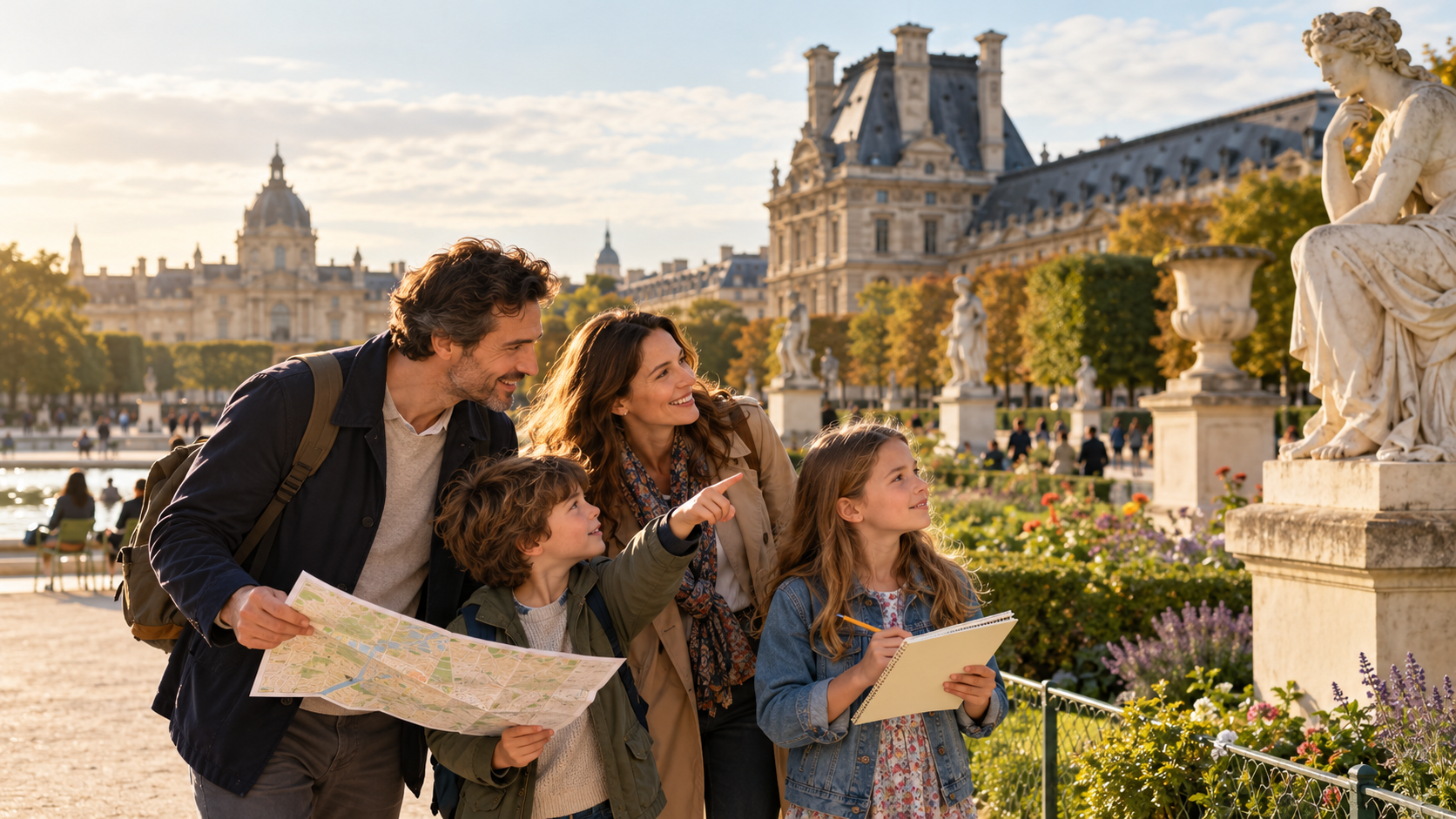
Keep the emotional strengths families value
Theme parks are skilled at orientation, anticipation, visual storytelling, and giving different ages a shared subject. A cultural day can borrow those principles without copying rides or branded characters. Give the day a clear mission, a strong opening image, two or three memorable chapters, and time to recover. Children are more likely to engage when they understand what they are trying to discover.
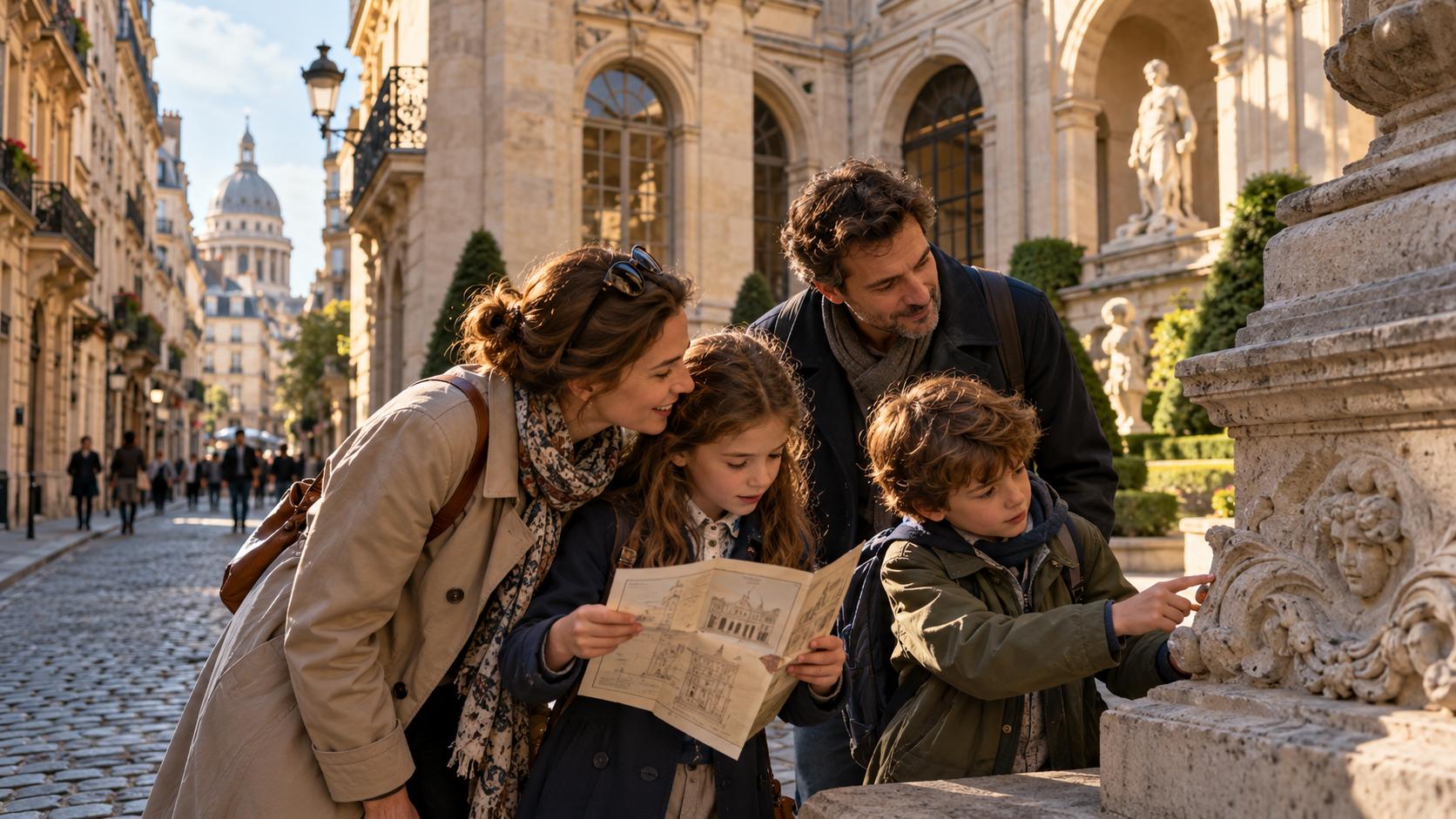
Turn Paris into a playable historical landscape
Choose one district and give children clues to find in façades, bridges, street names, or museum objects. Let them photograph a symbol, sketch a detail, or decide which route to take next. Use accurate, age-appropriate context so the game leads toward understanding rather than random collection. A compact route protects energy and leaves room for questions.
Combine one collection with one active experience
A family museum visit works best when it has a narrow objective, such as finding three objects connected to royal life or identifying how artists represented movement. Follow it with a garden, river crossing, or live story so the body can move and the ideas can settle. Avoid scheduling several major museums on the same day simply because admission is available. Cultural memory grows through contrast, not quantity.
Choose characters with complexity, not fairy-tale certainty
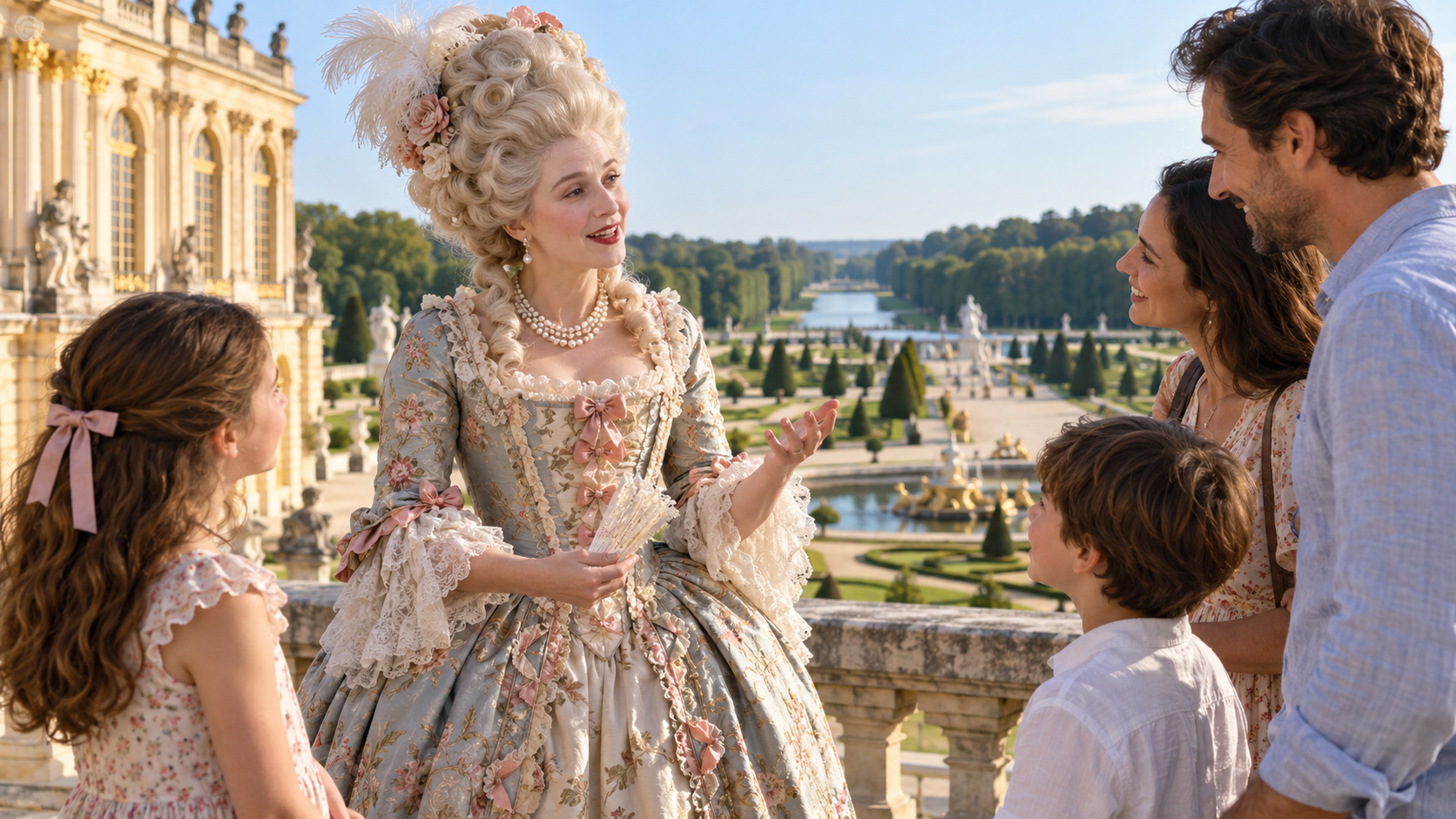
Historical figures can be compelling for children when the storyteller makes motives and consequences understandable. A professional actor embodying Marie Antoinette can introduce court life, public image, political crisis, and the limits of what historians can know. The encounter should never flatten violence or inequality into decorative fantasy. Children can handle complexity when it is explained clearly and without sensationalism.
A cultural alternative does not need to compete with Disneyland Paris on scale. It can succeed through intimacy, agency, and the feeling that a real street or object has started to speak. Plan one meaningful indoor visit, one active discovery, and one story-centered moment, then leave space for food and rest. Families often remember the question they solved together more vividly than the number of attractions completed.
Begin the family conversation with the action everyone enjoyed rather than the name of an attraction. One child may value solving a problem, another may remember a character, and an adult may have loved noticing how a scene was constructed. Those answers point toward different cultural formats, so choose one shared interest for the principal outing and keep the rest flexible. Review current age suitability, language, and the practical conditions for each family member before turning the subject into a reservation. A successful alternative is something the group wants to experience on its own terms, rather than a museum selected as a substitute for rides. You can then let Paris contribute a discovery nobody knew to request.
A family alternative should also allow for different responses within the group. One child may enjoy searching for a detail, while another wants to hear a story and an adult prefers to look at an original object. Choose one shared interest for the principal activity and avoid requiring everyone to enjoy every part in exactly the same way. Explain the actual format before booking, with current age guidance, language, walking conditions, and access requirements checked. Keep a simple stopping point and a practical pause in the route so the family can adapt. Invite each person to describe a discovery afterward rather than rank the attractions they completed. The outing can become culturally meaningful through those different observations, with a shared question providing more continuity than a busy checklist.
Continue the story with Immmersiv
At Versailles, Marie Antoinette, Rebel Queen features a professional actor embodying Marie Antoinette and gives families a human entry point into a complicated royal story. In Montmartre, The Impressionists of Montmartre features a professional actor embodying Père Tanguy and explores the networks behind famous art. Match the choice to the child’s strongest curiosity and the geography of the day. Verify current availability, language, meeting point, and practical conditions before planning.