Best Things to Do in Paris for Seniors
Paris rewards travelers who allow the city to unfold rather than trying to conquer it. Senior visitors do not need a separate version of culture; they need reliable information, thoughtful pacing, and choices that respect individual energy and mobility. One museum, one neighborhood, and one memorable conversation can fill a day beautifully. Comfort creates the attention from which deeper discovery grows.
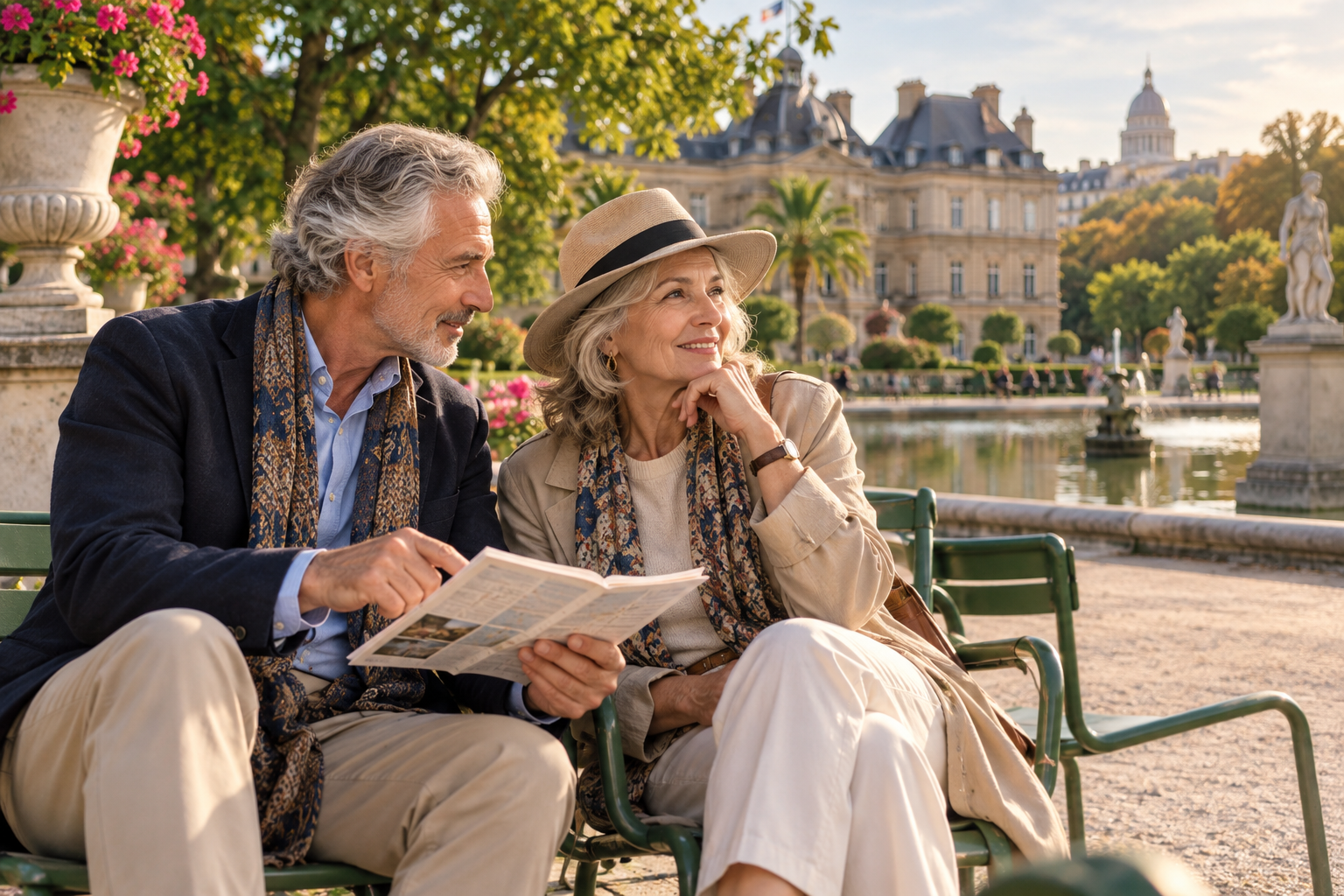
The best Paris itinerary for senior travelers begins with honest distances rather than optimistic lines on a map. Cobblestones, stairs, security lines, long galleries, and standing time matter as much as the number of kilometers shown by a route planner. Choose one geographical area for each half-day and identify seating, restrooms, and transport before fatigue makes those details urgent. This approach is not about doing less; it is about preserving enough energy to experience each place fully.
Choose museums with an access plan
The Louvre publishes detailed accessibility information and strongly advises timed reservations when overcrowding may affect admission. The Musée d’Orsay states that its exhibition and service areas are accessible via elevators or ramps, while current renovation work can alter the most convenient entrance. These official details are more useful than broad claims that a museum is simply accessible. Confirm the route that matches your needs, ask staff about seating or mobility equipment, and select a short list of works before entering.
Build neighborhoods around a single story
Montparnasse can be explored through writers and cafés, Montmartre through artists and changing urban identity, and Place Vendôme through fashion, performance, and wartime memory. A clear story reduces unnecessary backtracking because it gives the walk a natural beginning and end. Use Montparnasse and Luxembourg or Place Vendôme to understand the setting before choosing a comfortable route. Benches, cafés, and taxi pickup points should be part of the design rather than improvised after the group is tired.
Use historical characters to deepen familiar places
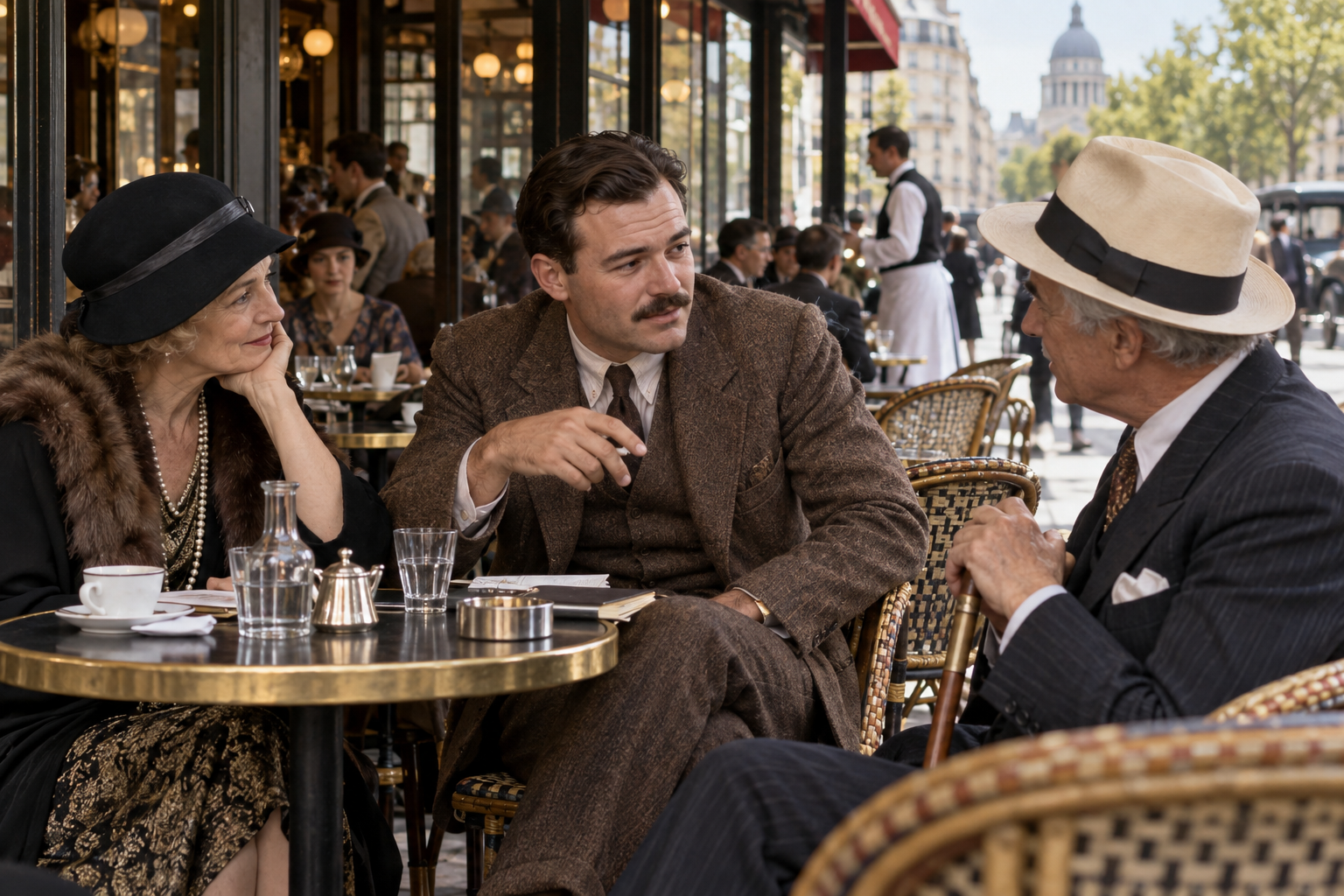
Experienced travelers may already know the famous façade, painting, or biography, which makes a personal perspective especially valuable. A professional actor embodying a historical character can explore motives, doubts, contradictions, and choices while the real city supplies evidence around the conversation. The actor should name the character clearly and distinguish documented facts from interpretation and dramatic framing. This format invites questions and lived reflection without asking visitors to stand through a conventional lecture.
Alternate concentration with genuine rest
A morning museum can be followed by a seated lunch and a short afternoon encounter instead of another monumental interior. Reserve evenings selectively, especially after transatlantic travel, and leave recovery time before performances that matter to you. River views, gardens, and covered passages offer atmosphere without requiring constant forward motion, although weather and surface conditions still deserve attention. A flexible day protects both physical comfort and the spontaneity that makes Paris feel personal.
Paris for seniors is at its best when practical preparation remains invisible enough to support curiosity. Verify access, reduce transfers, and give each day one cultural anchor with room around it. The result is not a compromised itinerary but a more deliberate one, rich in conversation, context, and memory. Slow attention often reveals the Paris that hurried visitors pass without seeing.
For the practical part of this outing, consult Paris, your playground to locate Immmersiv experiences. Browse the personalities according to the subject that interests you. Read what to expect alongside the individual experience description before booking. Confirm current language, suitability, walking requirements, access needs, and availability for your own group.
Continue the story with Immmersiv
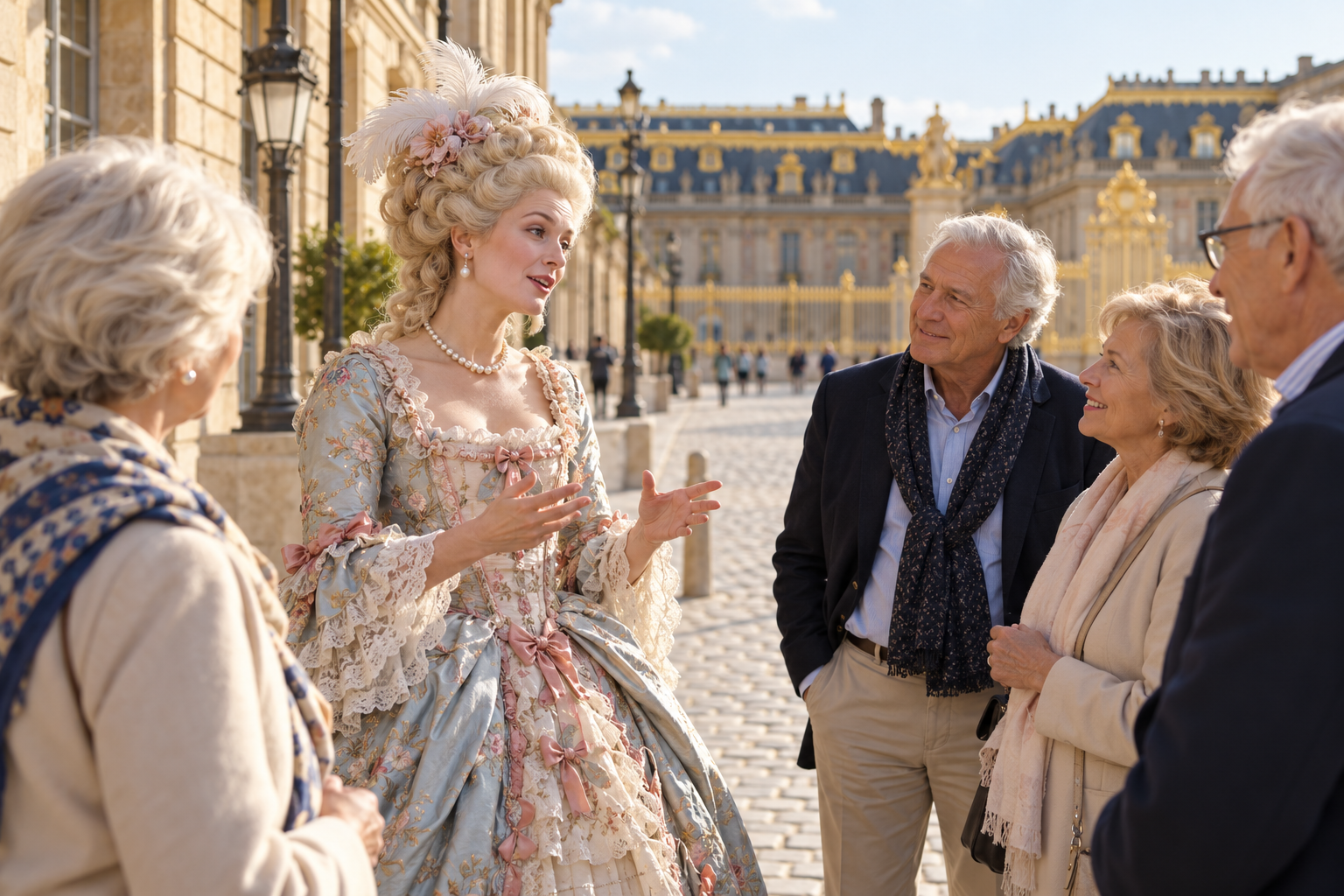
In Explore Hemingway’s Paris, a professional actor embodying Ernest Hemingway brings the writer’s young Paris into direct conversation. Montparnasse becomes a setting for his ambitions, friendships, and creative choices. In Versailles, Marie Antoinette, Rebel Queen introduces a professional actor embodying Marie Antoinette. Her perspective explores the queen’s choices through the streets of the royal town.